
- Home
- About Us
- Connect
- Patient Resources
- Anesthesia / Sedation / Pain
- Patient Instructions/After Care
- Patient Intake Forms
- Patient Consent Forms
- Office Policies
- Insurance Plans
- Financial Policies
- Privacy Policy
- Online Privacy Policy
- Mobile Message Terms
- Statement of Nondiscrimination
- Open Payments Database Notice
- Accessibility Statement
- Pet/Service Animal Policy
- Health Advisory
- Medical Dermatology
- Mohs/Reconstructive Surgery
- Facial Aesthetics
- Facial Aging 101
- Concerns
- Non Surgical
- Surgical
- Hair Loss
- Cosmetic Mole Removal
- Body Aesthetics
- Varicose Veins
- Scars
- Skin Care
- Wound Care
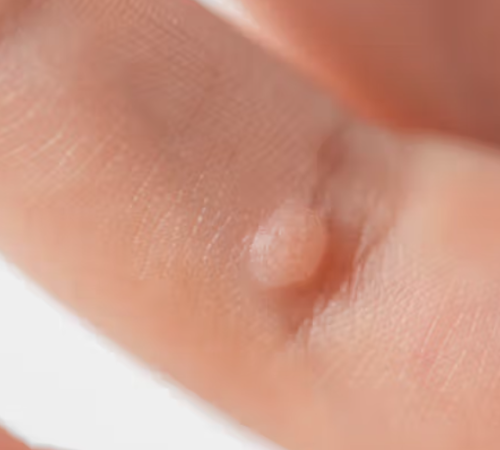
Warts
Warts are small, benign growths on the skin caused by an infection with the human papillomavirus (HPV). They typically appear as rough, raised bumps that can develop anywhere on the body, though they are most common on the hands, feet, and face. Warts are contagious and can spread through direct contact with an infected person or by touching contaminated surfaces. There are different types of warts, including common warts, plantar warts, flat warts, and genital warts, each with distinct characteristics. While warts are usually harmless and may resolve on their own, they can be uncomfortable
Common Types of Warts

Warts Treatments
1 – Cryotherapy
Cryotherapy is a popular treatment for warts that involves freezing the wart with liquid nitrogen. This procedure destroys the wart tissue by causing it to freeze and fall off. Multiple sessions may be required, depending on the size and location of the wart, and it can sometimes cause temporary discomfort or blistering in the treated area.
2 – Surgical Removal
In some cases, warts may need to be surgically removed, especially if they are large, deep, or resistant to other treatments. This can be done through simple excision, where the wart is cut out, or by using a procedure known as electrosurgery, where the wart is burned off using an electric current. Surgical removal is typically reserved for warts that do not respond to other treatments.
3 – Immunotherapy
Immunotherapy treatments, like injectable medications, stimulate the body’s immune response to fight off the wart-causing virus. One such treatment involves injecting a substance like Candida antigen or interferon directly into the wart to boost the body’s immune system. This treatment is generally used for warts that are difficult to treat or when other treatments have failed