
- Home
- About Us
- Connect
- Patient Resources
- Anesthesia / Sedation / Pain
- Patient Instructions/After Care
- Patient Intake Forms
- Patient Consent Forms
- Office Policies
- Insurance Plans
- Financial Policies
- Privacy Policy
- Online Privacy Policy
- Mobile Message Terms
- Statement of Nondiscrimination
- Open Payments Database Notice
- Accessibility Statement
- Pet/Service Animal Policy
- Health Advisory
- Medical Dermatology
- Mohs/Reconstructive Surgery
- Facial Aesthetics
- Facial Aging 101
- Concerns
- Non Surgical
- Surgical
- Hair Loss
- Cosmetic Mole Removal
- Body Aesthetics
- Varicose Veins
- Scars
- Skin Care
- Wound Care

Vitiligo
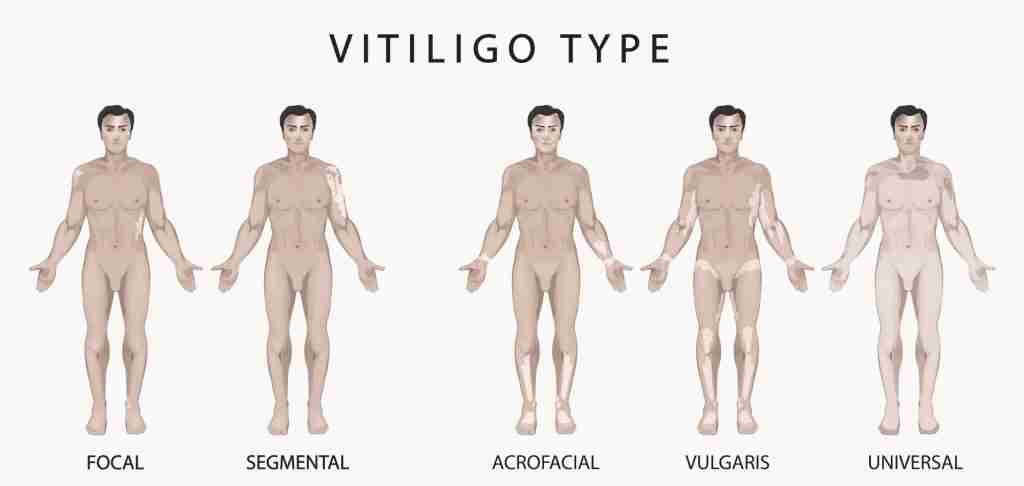
Vitiligo is a skin condition characterized by the loss of pigmentation in certain areas of the skin, leading to the development of white patches. It occurs when melanocytes, the cells responsible for producing pigment (melanin), are destroyed or stop functioning. The exact cause of vitiligo is not fully understood, but it is believed to involve an autoimmune response, where the body’s immune system mistakenly attacks its own melanocytes. It can affect people of all skin types and often starts in childhood or early adulthood.
Vitiligo Treatments
1. Topical Treatments
Corticosteroids: Prescription-strength corticosteroid creams or ointments are commonly used to help restore pigment by suppressing the immune response that attacks melanocytes. They are most effective when used early in the disease and for small patches.
Topical Calcineurin Inhibitors: Medications such as tacrolimus and pimecrolimus help reduce inflammation without the side effects of steroids. These can be particularly useful for sensitive areas like the face or genital region.
Topical Vitamin D Analogues: Creams containing calcipotriene or tacalcitol may help stimulate melanocytes, especially in combination with other treatments.
2. Phototherapy (Light Therapy)
Narrowband UVB Therapy: This is a popular treatment for vitiligo, especially for widespread or difficult-to-treat patches. It involves exposing the skin to ultraviolet (UV) light in controlled doses, which can stimulate melanocytes to produce pigment. Treatments are typically administered in a healthcare setting a few times a week.
Excimer Laser: A targeted form of UVB therapy that uses a laser to treat small, localized patches of vitiligo. This method is useful for people with small or specific areas of depigmentation.
3. Surgical Treatments
Skin Grafting: In cases where vitiligo is stable (i.e., no new patches appear for a period), skin grafting may be an option. Healthy, pigmented skin from another area of the body is transplanted to the vitiligo-affected area.
Melanocyte Transplantation: This technique involves transplanting melanocytes (pigment-producing cells) from one part of the body to the vitiligo-affected area. This can be effective for some patients.
Blister Grafting: This method involves creating blisters on the pigmented skin, which are then transferred to the depigmented areas.
4. Depigmentation (for Extensive Vitiligo)
For patients with extensive or rapidly spreading vitiligo, depigmentation therapy may be considered. This treatment uses medications (such as monobenzone) to lighten the remaining pigmented skin to match the depigmented areas, resulting in a more uniform appearance.
5. Camouflage and Cosmetics
Makeup: High-quality cosmetic products like concealers and foundations can be used to cover vitiligo patches. Specialized makeup (e.g., Dermablend, Cover FX) can create a natural look and provide confidence.
Self-Tanners: Some people with vitiligo use self-tanning lotions to blend lighter patches with their surrounding skin. However, these products only provide temporary color and don’t affect the underlying condition.
Tattooing: In some cases, especially for small, stable patches, tattooing (micropigmentation) can be an option to restore the appearance of the skin.
6. Oral Medications
Immunosuppressants: Oral medications such as corticosteroids or other immune-modulating drugs may be used in severe cases, but they are generally reserved for short-term use due to side effects.
JAK Inhibitors: Janus kinase inhibitors, like tofacitinib or ruxolitinib, are newer oral medications that show promise in treating vitiligo by targeting the immune system. These are still being studied for their long-term safety and efficacy.
7. Psychological Support
Vitiligo can have a significant psychological impact, leading to low self-esteem or depression. Psychological support, including counseling or support groups, can help individuals cope with the emotional aspects of the condition. Sometimes, cognitive-behavioral therapy (CBT) is recommended to help manage stress and emotional challenges related to vitiligo.
8. Sun Protection
People with vitiligo are more susceptible to sunburn because their skin has less pigment to protect against UV radiation. It’s crucial to use broad-spectrum sunscreen with a high SPF, wear protective clothing, and avoid prolonged sun exposure to prevent further damage to the skin and to minimize the risk of sunburn on depigmented areas.