- Home
- About Us
- Connect
- Patient Resources
- Anesthesia / Sedation / Pain
- Patient Instructions/After Care
- Patient Intake Forms
- Patient Consent Forms
- Office Policies
- Insurance Plans
- Financial Policies
- Privacy Policy
- Online Privacy Policy
- Mobile Message Terms
- Statement of Nondiscrimination
- Open Payments Database Notice
- Accessibility Statement
- Pet/Service Animal Policy
- Health Advisory
- Medical Dermatology
- Mohs/Reconstructive Surgery
- Facial Aesthetics
- Facial Aging 101
- Concerns
- Non Surgical
- Surgical
- Hair Loss
- Cosmetic Mole Removal
- Body Aesthetics
- Varicose Veins
- Scars
- Skin Care
- Wound Care
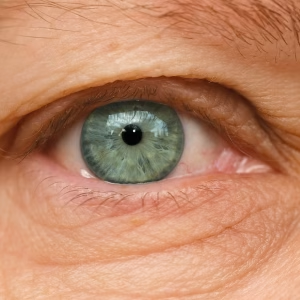
Loose upper eyelid skin (Dermatochalasis)
Overview:
Upper eyelid loose skin refers to the sagging or drooping of the skin on the upper eyelids, often caused by natural aging, genetics, or environmental factors. As we age, the skin loses elasticity and collagen, leading to a more relaxed, crepey appearance. The muscles and tissues that support the eyelids may weaken, contributing to the development of loose skin. This condition can create a tired or older look, and in more severe cases, it may even obstruct vision.
Are you a candidate?
You may be a candidate for treatment if you have noticeable sagging or drooping skin on your upper eyelids, particularly if it affects your appearance or vision. Ideal candidates typically have mild to moderate skin sagging and are in good health. If the loose skin is impairing your vision or causing discomfort, surgical options like blepharoplasty may be necessary. If the sagging is more cosmetic, non-surgical treatments could be a suitable option.
Options: Surgical vs Non-Surgical
Surgical
(Upper Blepharoplasty):
Click here to learn more
-
- Upper Blepharoplasty is the most effective surgical option for addressing significant upper eyelid sagging. It involves removing excess skin, fat, and muscle from the upper eyelids, helping to tighten the skin and improve the overall appearance.
Non-Surgical Options:
-
- Laser Treatments: Ablative resurfacing lasers (e.g., CO2, Erbium lasers) and chemical peels (i.e.- phenol-croton oil) stimulate collagen production, tightening the skin without surgery.
Exceptions for Treatment:
- People with active skin infections, severe allergies, or certain chronic conditions (e.g., uncontrolled diabetes or heart disease) may not be candidates for some treatments.
- Pregnant or breastfeeding women should avoid certain treatments.
- Severe cases of upper eyelid skin sagging may require surgery, as non-surgical options might not be effective.
- People with unrealistic expectations may not be ideal candidates for cosmetic treatments.
Expected Downtime:
- Surgical Treatment (Upper Blepharoplasty): Recovery typically involves 7-10 days of downtime. There may be bruising, swelling, and discomfort, and full recovery can take a few weeks to months.
- Non-Surgical Treatments:
- Laser Treatments: Downtime is minimal, with most individuals able to return to normal activities within a few days to a week, though some redness or swelling may persist temporarily.
Risks:
- Surgical Risks: Blepharoplasty carries typical surgery risks, including infection, scarring, bleeding, and anesthesia complications. There is also the risk of over-correction or asymmetry.
- Non-Surgical Risks: Non-surgical treatments carry fewer risks, but some may cause temporary side effects such as bruising, swelling, allergic reactions, or uneven results.
Financial Cost:
- Surgical Treatment (Blepharoplasty): The cost generally ranges from $2,000 to $5,000 or more, depending on the complexity and location.
- Non-Surgical Option (Laser Treatments): Typically range from $1,000 to $3,000 per session.