
- Home
- About Us
- Connect
- Patient Resources
- Anesthesia / Sedation / Pain
- Patient Instructions/After Care
- Patient Intake Forms
- Patient Consent Forms
- Office Policies
- Insurance Plans
- Financial Policies
- Privacy Policy
- Online Privacy Policy
- Mobile Message Terms
- Statement of Nondiscrimination
- Open Payments Database Notice
- Accessibility Statement
- Pet/Service Animal Policy
- Health Advisory
- Medical Dermatology
- Mohs/Reconstructive Surgery
- Facial Aesthetics
- Facial Aging 101
- Concerns
- Non Surgical
- Surgical
- Hair Loss
- Cosmetic Mole Removal
- Body Aesthetics
- Varicose Veins
- Scars
- Skin Care
- Wound Care
Melasma
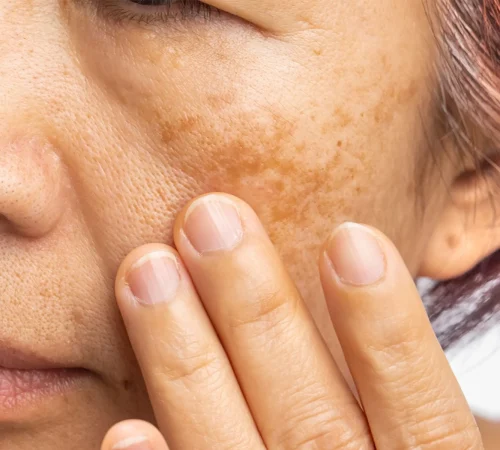
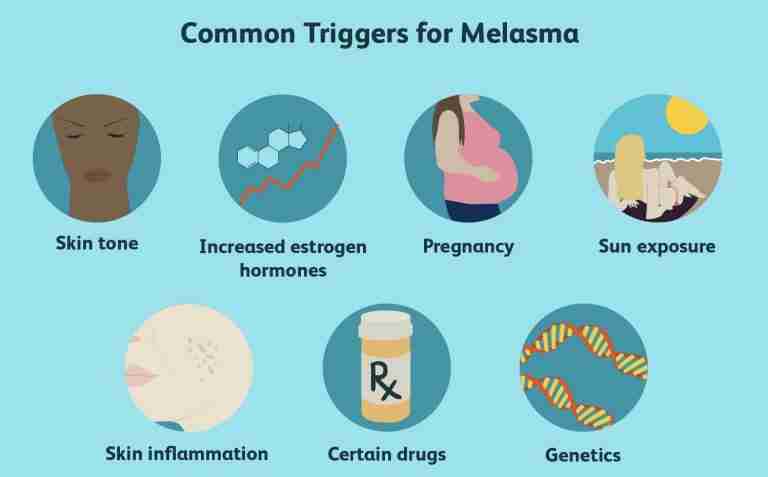
Melasma is a common, acquired skin condition characterized by dark, discolored patches typically seen on the face. It primarily affects women, especially those of Latin American, Asian, and African descent. The condition is most commonly associated with hormonal changes, which is why it often develops during pregnancy (also known as the “mask of pregnancy”), or due to oral contraceptive use or hormone replacement therapy. Sun exposure is a major environmental trigger for melasma, as ultraviolet (UV) light can stimulate the pigment-producing cells in the skin (melanocytes).
Common Triggers of Melasma
Diagnosis and Types of Melasma
The diagnosis of melasma is primarily based on clinical evaluation, which involves a careful examination of the skin and its features.
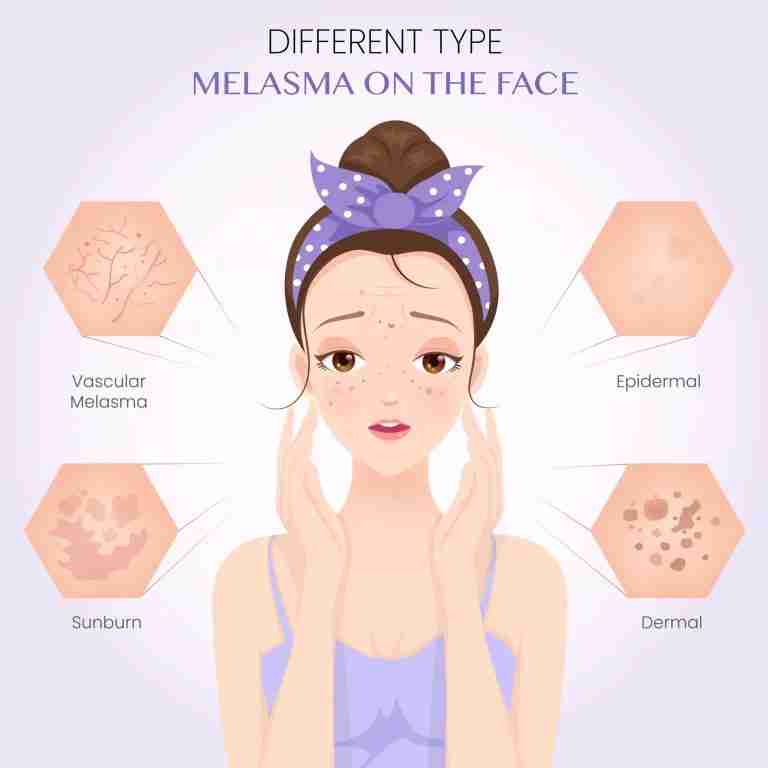
The diagnosis of melasma can sometimes be differentiated based on the depth of the pigmentation in the skin, which can be classified into epidermal, dermal, or mixed melasma. The distinction between these types is crucial for determining the appropriate treatment. Here’s how the diagnosis is typically made:
Epidermal Melasma: The pigmentation appears as well-defined, brown to dark brown patches. These patches are located primarily in the epidermis (the outer layer of the skin). Epidermal melasma tends to be more superficial and easier to treat compared to dermal melasma.
Dermal Melasma: The pigmentation in dermal melasma is bluer or grayish in appearance due to the deeper placement of the melanin in the dermis (the deeper skin layer). Dermal melasma is often harder to treat because the pigment is deeper in the skin.
Mixed Melasma: A combination of both epidermal and dermal pigmentation, where some areas may be well-defined and dark brown (epidermal), while others may appear lighter and bluish (dermal).
- Vascular Type: a less common form of melasma that is characterized by the involvement of blood vessels in the skin. This type of melasma is thought to be related to increased vascularity (i.e., the number or dilation of blood vessels) and can sometimes present alongside other conditions like rosacea or telangiectasia (dilated small blood vessels).

Types of Hyperpigmentation on the Face

Melasma Treatments
Sun Protection:
Use sunscreen: Apply a broad-spectrum sunscreen with SPF 30 or higher every day, even on cloudy days. Reapply every 2 hours when outside.
Wear protective clothing: Use hats, sunglasses, and long sleeves to shield your skin from UV rays.
Avoid peak sunlight hours: Stay indoors during peak sun hours, typically between 10 AM and 4 PM, when UV rays are strongest.
Seek shade: When outside, try to stay under a tree, umbrella, or some form of shade to reduce direct sunlight exposure.
Hormonal Management:
If melasma is triggered by hormonal changes (e.g., during pregnancy or while on birth control), it may be helpful to talk to a doctor about alternatives or ways to manage hormonal fluctuations.
Avoid hormonal triggers: If possible, avoid oral contraceptives or hormone replacement therapy if these contribute to melasma flare-ups.
Skin Care Habits:
Gentle cleansing: Avoid harsh scrubs or cleansers, as these can irritate the skin and worsen pigmentation.
Moisturizing: Keep your skin hydrated to support its barrier and reduce irritation, which can trigger melasma.
Avoid known irritants: Fragrances, alcohol-based toners, or overly abrasive exfoliants can make melasma worse.
Healthy diet: A diet rich in antioxidants (like vitamins A, C, and E) can help skin health and may reduce pigmentation.
Stress management: High levels of stress can contribute to hormonal changes, which may trigger melasma. Practicing relaxation techniques like yoga, meditation, or deep breathing may help

Melasma Treatment
1. Topical Treatments
Hydroquinone: A skin-lightening agent that inhibits melanin production. It is available in both over-the-counter (2%) and prescription (4% or higher) formulations.
Tretinoin (Retinoid): A prescription-strength retinoid that accelerates skin turnover, helping to fade dark spots. It is often used in combination with other treatments like hydroquinone.
Azelaic Acid: A prescription cream that reduces melanin production and has anti-inflammatory effects, making it effective for treating melasma, especially in sensitive skin.
Kojic Acid: A skin-lightening agent that works similarly to hydroquinone by inhibiting melanin production. It can be found in both prescription and over-the-counter formulations.
Corticosteroids: Sometimes combined with other topical treatments to reduce inflammation and help with pigmentation. These are typically used for short periods to avoid side effects.
2. Chemical Peels
Glycolic Acid Peel: A superficial chemical peel that can help lighten melasma by exfoliating the outer skin layers, promoting new skin growth.
Trichloroacetic Acid (TCA) Peel: A stronger chemical peel used for deeper pigmentation. However, it should be used with caution and in low concentration in melasma cases, as it may cause hyperpigmentation in some people.
3. Laser Treatments
Fractional Non-Ablative Laser (1927nm): A laser treatment that targets deeper layers of skin to break up pigmentation and stimulate collagen production, reducing the appearance of melasma.
Fractionated Picosecond Laser: A laser that uses short pulses of light to target melanin and break it up. It is often used for more persistent or severe melasma.
4. Oral Medications
Tranexamic Acid: An oral medication that has been found to reduce melasma by inhibiting the production of melanin. It is usually prescribed when other treatments have not been effective.
Oral Contraceptives: In some cases, adjusting or discontinuing oral contraceptives (if hormonal changes are the cause of melasma) can help reduce symptoms, but this should be done under the guidance of a doctor.