
- Home
- About Us
- Connect
- Patient Resources
- Anesthesia / Sedation / Pain
- Patient Instructions/After Care
- Patient Intake Forms
- Patient Consent Forms
- Office Policies
- Insurance Plans
- Financial Policies
- Privacy Policy
- Online Privacy Policy
- Mobile Message Terms
- Statement of Nondiscrimination
- Open Payments Database Notice
- Accessibility Statement
- Pet/Service Animal Policy
- Health Advisory
- Medical Dermatology
- Mohs/Reconstructive Surgery
- Facial Aesthetics
- Facial Aging 101
- Concerns
- Non Surgical
- Surgical
- Hair Loss
- Cosmetic Mole Removal
- Body Aesthetics
- Varicose Veins
- Scars
- Skin Care
- Wound Care
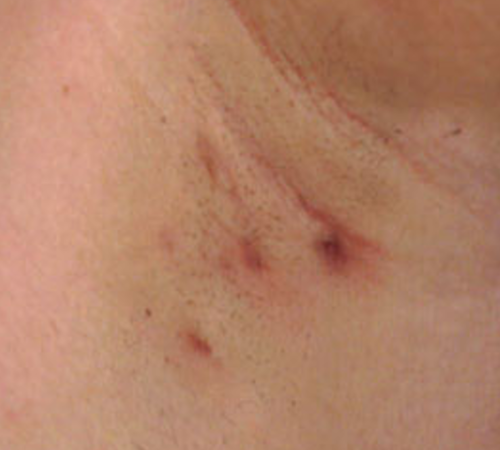
Hidradenitis Suppurativa
Hidradenitis Suppurativa (HS) is a chronic inflammatory skin condition characterized by the formation of painful bumps, abscesses, and tunnels under the skin, often in areas where skin rubs together, such as the armpits, groin, buttocks, and under the breasts. It occurs when hair follicles and sweat glands become blocked and inflamed, leading to infection and the development of lumps that may rupture and drain pus. The condition can vary in severity, with some individuals experiencing only occasional flare-ups, while others may have frequent, painful episodes that significantly impact their daily lives.
Clinical Presentation of Hidradenitis Suppurativa

Hidradenitis Suppurativa Treatments
Antibiotics
Antibiotics, both topical and oral, are commonly used to treat Hidradenitis Suppurativa (HS) by controlling infections and reducing inflammation. Topical antibiotics like clindamycin are often used for mild cases, while oral antibiotics such as tetracycline or doxycycline are prescribed for more severe flare-ups to reduce bacteria and manage symptoms.
Anti-inflammatory Medications
Nonsteroidal anti-inflammatory drugs (NSAIDs) like ibuprofen can help alleviate pain and inflammation associated with HS. In more severe cases, corticosteroids may be prescribed to control inflammation and reduce swelling during flare-ups, although they are typically used for short-term management due to potential side effects.
Biologic Medications
Biologic medications, such as adalimumab (Humira) and infliximab (Remicade), are used for moderate to severe HS that does not respond to other treatments. These injectable drugs target specific immune system components to reduce inflammation, decrease flare-ups, and improve skin healing.
Hormonal Therapy
Hormonal therapy is particularly helpful for women whose HS worsens due to hormonal changes, such as around menstruation. Birth control pills, anti-androgens like spironolactone, or other hormone-regulating treatments can help stabilize hormone levels and reduce flare-ups in affected areas.
Surgical Treatment
For advanced or recurring HS, surgical procedures may be necessary. Incision and drainage can relieve abscesses, while more invasive options like the removal of affected tissue or sweat glands are sometimes performed to prevent further outbreaks. Laser therapies may also be used to reduce lesion size and improve skin healing.
Retinoids
Oral retinoids, such as acitretin or isotretinoin, may be prescribed for severe HS. These medications help reduce inflammation, prevent hair follicle blockage, and manage the condition over time. However, retinoids can have significant side effects and require careful monitoring during treatment.